Why Gita is important for us? 2 – J K Sivan
SWADHARMA
Through Krishna’s teaching to Arjuna, we note what is stated above. Thank you Krishna. You are too clever to realise that what you adised and taught Arjuna would be faithfully followed by most of us, if not some of us. The word ‘Arjuna’, means one who is honest and straightforward in nature. He was true to himself, hid nothing from Krishna, and ultimately surrendered to Krishna totally. He was the best devotee. To Krishna, his charioteer, Arjuna entrusted to Him not only the reins of his horses, but the reins of his mind also. Let us follow Arjuna, and learn with him, what he was taught by Krishna. We dont have Krishna before us to guide us. Arjuna was blessed and fortunate.
Everybody has Krishna residing in his heart as the indwelling Self. He is nearer to us than the nearest. Let us bare our heart, with all its impurities and weaknesses, before Him and say, “O Lord! I take refuge in you. You are my sole guide, my master. Show me the right path and I shall follow it. There is no one else for me other than you”. If we do so, Arjuna’s charioteer will be our charioteer too. We shall hear His Gita teaching clearly when we read it next time.
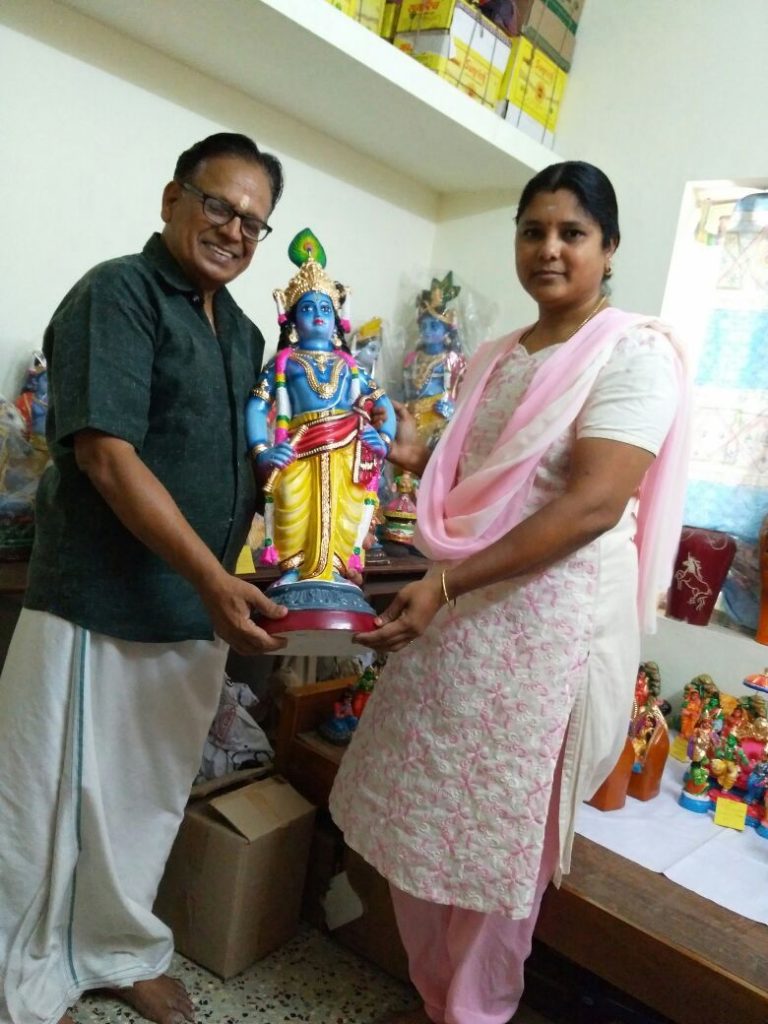
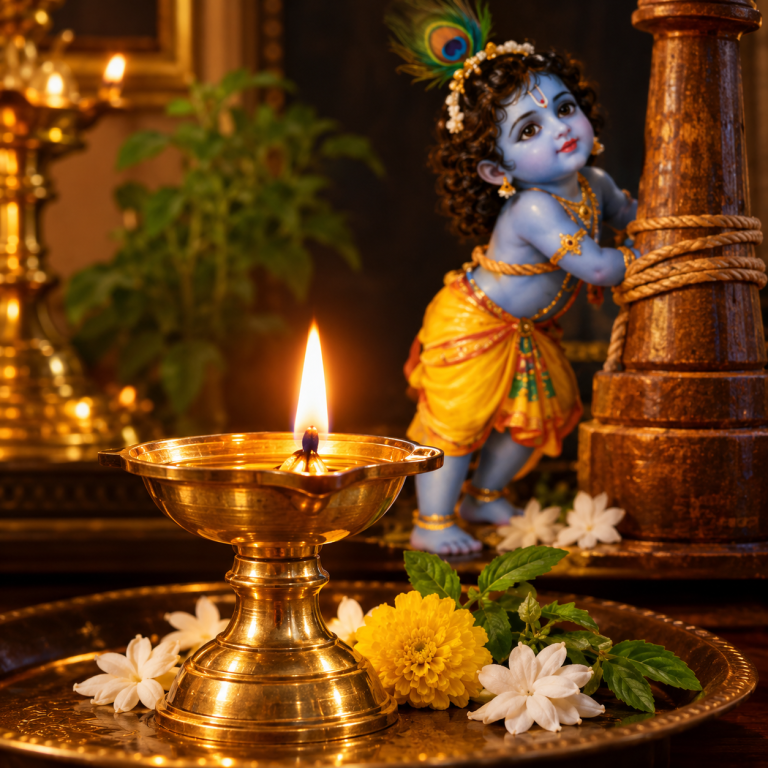
We see Krishna in many forms of Perumal, Narayana, standing for thousands of years at many ancient temples even today ready to protect and guide us. We fail to make our sincere effort to be His beneficiaries.
There are some fundamental principles of life, whch we should grasp so that the way before us would be clear. Gita teaches what these principles are. Krishna’s sayings are interpreted by many scholars in many languages. We are to be benefited by what appeals to us most and follow.
Once gods, demons and human beings went to Prajapati (the Creator) for advice. Prajapati gave all of them only one word of advice: the single syllable ‘द’ (da). The gods said, “We are given to passions and sensual pleasures. So,Prajapati has advised us ‘daman’ (दर्मन) (subduing and conquering them).” The demons said, ‘‘We are given to anger and cruelty. So, Prajapati has advised us to cultivate ‘daya’ (दया) (compassion).” The human beings said, “We are greedy and are always hankering after possessions. So, Prajapati has advised us to practise ‘dhan’ (दान) (charity and sharing).” Prajapati approved all these interpretations, as all of them had arrived at their interpretations through their own experiences. I quote this because we whould bear in mind it while we come across different interpretations.
The underlying cardinal principles we should remember from Gita are:
(i) The atman (the Self) is deathless and indivisible.
(ii) The body is insignificant and transient.
(iii) Swadharma must be followed. Swadharma is in the nature of duty to be performed.
Swadharma is ‘given.’ to all of us naturally; we do not have to go out looking for it. We have duty, swadharma, to serve the parents who gave us life, to serve the society that helped us grow/ Our swadharma is not born along with us. It is already there for us before our birth. Fulfillment of swadharma is the very purpose behind our birth. Swadharma is like one’s mother, is not chosen but predetermined. To disown one’s swadharma is to disown oneself, to commit suicide. What prevents us in realising and performing our swadharma is identification of oneself with one’s body and attachment .‘I and mine’ are best examples of attachment.
TO CONTINUE.
This blog is dedicated to the study, appreciation, and devotional exploration of Indian deities, traditions, and spiritual practices. All content published here is intended solely for educational, informational, and research purposes.
The views, interpretations, and information presented reflect personal understanding and publicly available sources, and are not intended to offend or misrepresent any religion, community, sect, or belief system. Readers are encouraged to consult authoritative scriptures, scholars, and religious authorities for definitive guidance.
Copyright & Intellectual Property: Images, texts, quotations, and other materials featured on this blog may be the property of their respective owners. Such materials are used in good faith for non-commercial, educational, and illustrative purposes under the principle of fair use/fair dealing. No copyright infringement is intended. If you are the rightful owner of any content displayed here and believe it has been used improperly, please contact us and the material will be promptly removed or duly credited.
No Liability: While every effort is made to ensure accuracy, the author makes no warranties regarding the completeness or reliability of the information. Any reliance you place on such information is strictly at your own risk.
All trademarks, logos, and brand names are the property of their respective owners.